
NEWS
Pam Bondi has publicly defended former President Donald Trump, asserting that there is no evidence demonstrating that he committed any crimes during or after his time in office. In her remarks, she characterized his administration as “the most transparent presidency in modern history,” arguing that the extensive scrutiny he faced ultimately revealed no substantiated proof of criminal wrongdoing.

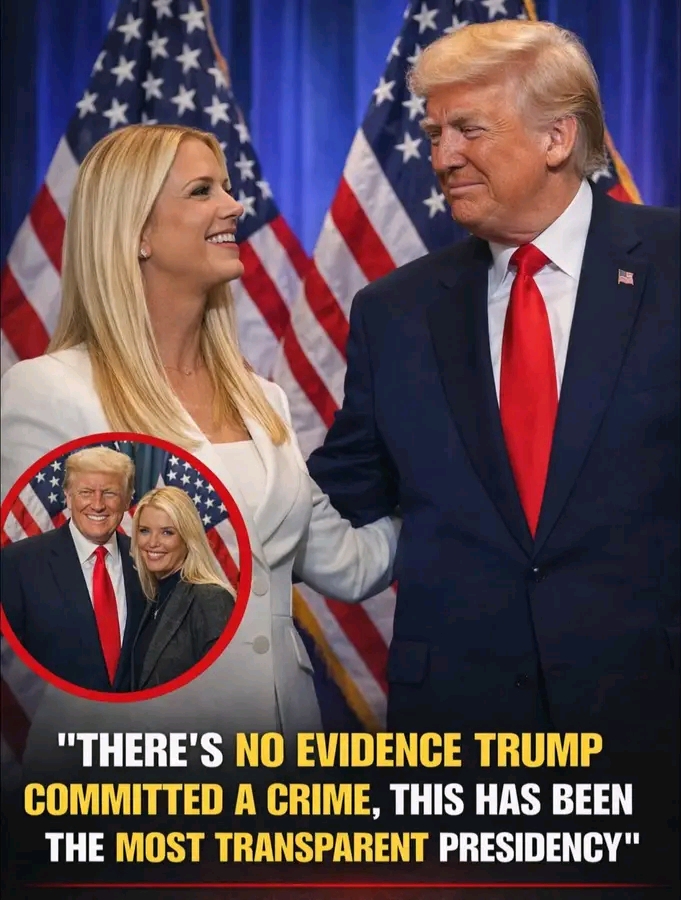
Pam Bondi has publicly defended former President Donald Trump, asserting that there is no evidence demonstrating that he committed any crimes during or after his time in office. In her remarks, she characterized his administration as “the most transparent presidency in modern history,” arguing that the extensive scrutiny he faced ultimately revealed no substantiated proof of criminal wrongdoing.
Bondi emphasized that multiple investigations — spanning congressional inquiries, independent reviews, and media examinations — have not produced definitive evidence to support major allegations against Trump. She suggested that many of the claims brought forward over the years were politically driven, fueled more by partisan opposition than by verifiable facts. According to Bondi, the frequency and intensity of investigations underscore the level of oversight Trump endured, which she believes reinforces her argument about transparency.
Her comments quickly gained national attention, reigniting a deeply polarized debate between supporters and critics. Supporters contend that the absence of convictions on several high-profile allegations validates Trump’s assertions that he was unfairly targeted. They argue that the repeated investigations demonstrate openness to scrutiny and that the legal processes ultimately failed to confirm the most serious accusations.
Critics, however, push back on Bondi’s framing. They argue that transparency can be interpreted in different ways and point out that legal proceedings and investigations involving Trump have evolved over time. Some maintain that ongoing legal scrutiny and unresolved matters complicate the narrative of complete vindication.
Bondi’s defense adds another layer to an already charged political climate, intensifying discussions around accountability, the role of investigations in democratic governance, and the balance of executive power. As public opinion remains sharply divided, her statements have further amplified the national conversation about evidence, fairness, and the standards applied to public officials.