
NEWS
BREAKING TONIGHT: U.S. Launches Military Operations in Ecuador — What’s Really Happening?

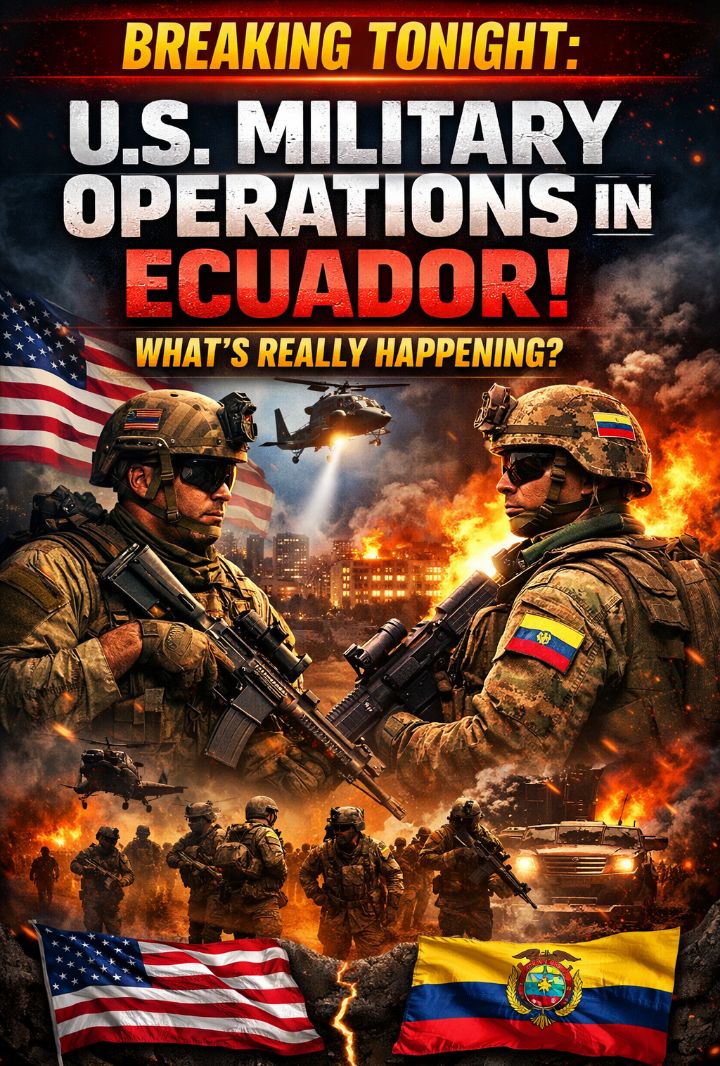
Late tonight, the United States Southern Command confirmed that U.S. forces have begun coordinated military operations in Ecuador alongside Ecuadorian security officials. The announcement immediately sparked attention across the region, raising questions about the scope and objectives of the mission.
According to initial statements, the operation is focused on targeting what officials described as “terrorist organizations” and heavily armed criminal groups operating within parts of the country. The move comes as Ecuador continues to confront serious security challenges linked to organized crime networks and violence.
Authorities emphasized that the mission is being conducted jointly with Ecuador’s military and government leaders. The goal, officials say, is to strengthen security cooperation, improve intelligence sharing, and disrupt the operations of groups accused of destabilizing communities and threatening national security.
Ecuador has faced increasing pressure in recent years as criminal organizations have expanded their influence in certain areas. Government leaders have previously declared states of emergency and launched crackdowns aimed at restoring order and protecting civilians.
For the United States, involvement through Southern Command reflects its broader regional security strategy. The command, headquartered in Florida, oversees military cooperation throughout Central and South America and frequently works with partner nations on counter-narcotics, counter-terrorism, and stability operations.
While officials have not released detailed operational plans, they stressed that the effort is targeted and coordinated with Ecuador’s government. There has been no immediate report of large-scale troop deployments, but security measures are expected to remain heightened as the operation unfolds.
As developments continue, observers are watching closely to see how the operation impacts Ecuador’s internal security situation and regional stability. More updates are expected as both governments provide additional details on the mission’s progress and results.

After a lifetime of love and devotion, these two souls now rest side by side — a story that proves true love never fades.

BREAKING TONIGHT: U.S. Launches Military Operations in Ecuador — What’s Really Happening?

URGENT STATEMENT FROM THE NEW SUPREME LEADER OF THE ISLAMIC REVOLUTION OF IRAN, ALIREZA ARAFI

‘Not Winston Churchill’: Trump hits out at Starmer, as UK to send warship to Cyprus

JUST IN: 🇮🇱🇮🇷 Israel strikes Tehran’s Mahrabad Airport in Iran. Shocking Footage Inside! Watch Now 👀

BREAKING – Israel just bоmbed and destrоyed the assembly building where about 90 senior clerics were choosing the next Supreme Leader of Iran

LATEST UPDATE: Trump Sends Chilling Message to Iran’s New Leadership — “It’s Too Late”

GLOBAL SHOCKWAVE: Trump Warns Iran of “Total Elimination” If U.S. Is Threatened — ‘Wiped Off the Face of the Earth’ Statement Sparks Firestorm
JUST IN: IRGC Claims Israel’s Air Defenses ‘Neutralized’ — Warns of Escalation to Khorramshahr-4 Stage

JUST IN: 🇮🇷 Iran says Mojtaba Khamenei, son of late Supreme Leader, is in perfect health and overseeing the regional war with the US & Israel.

GLOBAL WAR ALERT — IRAN VOWS NO SAFE HAVEN: U.S. TROOPS ‘NOW TARGETED EVEN IN LUXURY HOTELS’ as Middle East Teeters on Full‑Scale CONFLICT!
