
NEWS
The General’s Revolt: When ‘No Rules’ Met the West Point Code

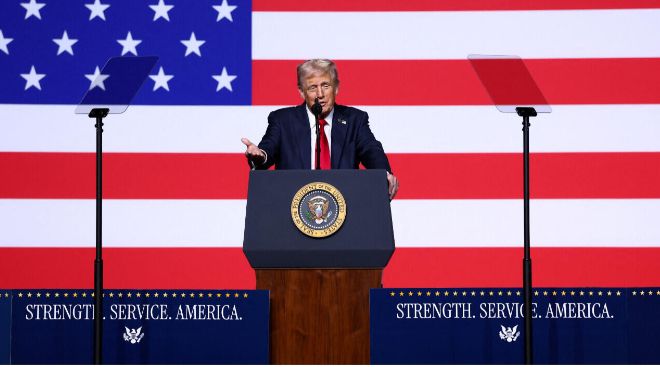
WASHINGTON — In the high-stakes lexicon of the Pentagon, “Rules of Engagement” are not mere suggestions; they are the thin, legal line between a mission and a war crime. On Tuesday, that line was not just crossed—it was erased—triggering a seismic rupture between the White House and the nation’s highest military brass.
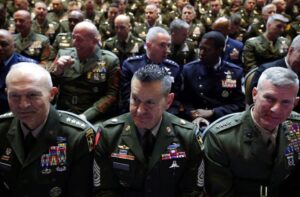
The resignation of three senior Army generals mid-meeting marks a historic collapse of the civil-military divide. The catalyst was a briefing that allegedly devolved into what one retired general described as a “moral vacuum.” The Secretary of Defense’s assertion that there are “no rules of engagement” in the current Iran conflict was the final straw for officers who have spent their careers tethered to the Geneva Conventions.
‘Just for Fun’ and the Reality of War
The friction escalated when President Donald J. Trump reportedly characterized certain tactical strikes as being conducted “just for fun.” To the gathered generals, the remark was more than a characteristic flourish; it was a reckless trivialization of human suffering that signaled a lack of strategic sobriety.
“War is a tragedy of logistics and lives, not a theater for amusement,” noted a retired four-star general familiar with the meeting’s proceedings. “When the Commander-in-Chief treats the deployment of lethal force as a casual hobby, the chain of command begins to liquefy.“
The generals also reportedly pushed back against the administration’s public claims of “unlimited weaponry.” Behind the scenes, the reality is far grimmer. The Pentagon’s stockpiles are being stretched to a breaking point, with resources diverted from the Indo-Pacific and Eastern Europe to fuel a Middle Eastern conflict that has yet to define its endgame.
A Strategy Without a Center
What began as a mission to neutralize Iran’s nuclear program has metastasized into a sprawling, multi-front economic and kinetic war with no clear exit ramp. As oil prices surge and casualties mount, the original objective has been obscured by a shifting set of grievances.
For the three generals who walked out, the issue was not just the rhetoric, but the vacuum of intent. A military without clear objectives is a military in peril. By resigning, these officers have sent a silent, devastating message to the American public: the leadership at the top is no longer speaking the language of strategy, but of impulse.
Conclusion: The Empty Chair
As the White House moves to fill these sudden vacancies, the “General’s Revolt” leaves a lingering question over the Department of Defense. In the American system, the military serves the civilian, but it is sworn to the Constitution. This week, three of the country’s most decorated soldiers decided that following the current path would require breaking that more sacred oath.

JUST IN: Congress Intelligence Committee Launches Sweeping Investigation Into Donald Trump Over Alleged War Crimes, Possible Crimes Against Humanity After Intelligence Failures Following Deadly Iran Airstrike That Destroyed Girls’ School in Minab Killing 100 Childen

WATCH: Trump Pays Solemn Tribute to Fallen Service Members at Dover Air Force Base

BREAKING: “You Better Act Now” — Trump Issues Stark Warning to Europe on Immigration and Energy

Adam Schiff: The Attorney General must be held accountable for refusing to answer crucial questions about cash bribes!! This isn’t just oversight; it’s a cover-up that MUST end!! Raise your hand if you believe Bondi belongs in front of a jury!! 🤚

The General’s Revolt: When ‘No Rules’ Met the West Point Code

TERROR FOILED: FBI Director Kash Patel says the bureau thwarted 4 terrorist attacks in December—including a Southern California bombing plot and 2 New Year’s Eve mass casualty events—using expanded biometric tracking and covert online surveillance.

PiS zawiesza senatora po krytycznych słowach na temat partii
Zdradził szczegóły

Właśnie gruchnęły szokujące wieści, Polacy nie mieli pojęcia 😱

Nikt tego nie wyłapał
