
NEWS
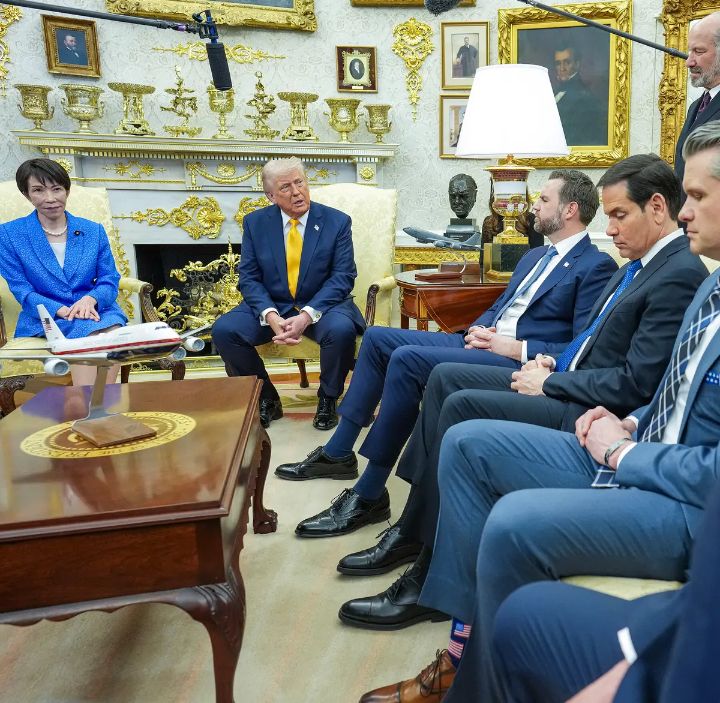
President Trump joked about Japan’s attack on Pearl Harbor during a meeting with the prime minister, Sanae Takaichi, in the Oval Office on Thursday. He was responding to a question about why Japan and other allies had received no advance notice of the U.S.-Israeli assault on Iran. “Why didn’t you tell me about Pearl Harbor, OK? Right?”

For decades, American presidents have avoided speaking harshly about Japan’s attack on Pearl Harbor in 1941, eager to focus instead on deepening ties with Tokyo, which has been a steadfast ally since World War II.
Not so with President Trump.
At an otherwise congenial meeting with Japan’s prime minister, Sanae Takaichi, in the Oval Office on Thursday, Mr. Trump invoked the Japanese attack on Dec. 7, 1941, which led the United States into World War II. He was responding to a question about why Japan and other allies had received no advance notice of the U.S.-Israeli assault on Iran.
“We didn’t tell anybody about it because we wanted surprise,” he said. “Who knows better about surprise than Japan, OK? Why didn’t you tell me about Pearl Harbor, OK? Right?”
There was some laughter from the officials and journalists gathered in the room. “You believe in surprise, I think, much more so than us,” he added.
As Mr. Trump spoke, Ms. Takaichi widened her eyes and appeared to take a deep breath. She kept her arms crossed in her lap and did not speak.
The remark was the latest example of Mr. Trump’s penchant for tossing aside diplomatic norms.
After the end of World War II, President Harry S. Truman used the attack on Pearl Harbor to justify American efforts to remake Japanese society and to impose a pacifist constitution. (The United States led the Allies’ occupation of Japan from 1945 until 1952.) The constitution forced Japan to renounce war and put limits on its military, making Tokyo reliant on the United States for protection.
But during the Cold War, the United States shifted its official portrayal of the attack, describing it as a historical tragedy rather than pointing fingers at Japan. American officials were eager to keep Tokyo as an ally as communism spread in Asia, and to form security and economic pacts.
In 2016, 75 years after Imperial Japanese warplanes destroyed the Pacific fleet in Pearl Harbor, President Barack Obama visited the site of the attack with Shinzo Abe, then Japan’s prime minister, who offered condolences “to the souls of those who lost their lives here.” Mr. Obama and Mr. Abe laid wreaths made of white peace lilies at the memorial.
Mr. Obama described in detail what occurred on the day of the attack, highlighted acts of heroism by American service members and said that the visit of Mr. Abe “reminds us of what is possible between nations and between peoples.”
Mr. Trump’s predecessors have avoided speaking at length about Pearl Harbor in the presence of Japanese leaders because “there’s been a really profound process of reconciliation between the United States and Japan,” said Mireya Solís, director of the Center for Asia Policy Studies at the Brookings Institution in Washington.
Mr. Trump’s remarks were “unusual — a shock,” she said. “The purpose of this visit is to emphasize the shared vision — the strong bonds that unite Japan and the United States,” she said. “Not the divisive past and the bitter rivalry and conflict of the war.”
40 milionów zł dotacji i klapa 😱
Nie mieści się w głowie, do czego doszło❗️❗️
Chuck Norris, ikona kina akcji, trafił do szpitala na Hawajach. Mimo nagłego incydentu medycznego, jego bliscy zapewniają o dobrym nastroju aktora.

Naprawdę to powiedział! Aż trudno uwierzyć

— Na razie wszyscy musimy być ostrożni w rokowaniach, ale z każdym dniem wydaje się, że jest lepiej. Do powrotu do zdrowia potrzeba będzie jeszcze dużo czasu i cierpliwości — powiedział “Faktowi” Dariusz Hołuj, tata Dominika. Więcej ➡️

Tak źle jeszcze nie było 😨😨

Uderzyły szokujące wieści, czegoś takiego jeszcze nie było❗️❗️
Wstrząsające, do czego doszło ❗️❗️ Skutki będą GLOBALNE

President Trump joked about Japan’s attack on Pearl Harbor during a meeting with the prime minister, Sanae Takaichi, in the Oval Office on Thursday. He was responding to a question about why Japan and other allies had received no advance notice of the U.S.-Israeli assault on Iran. “Why didn’t you tell me about Pearl Harbor, OK? Right?”

Gorzkie przywitanie Szachtara w Krakowie. Wulgarne krzyki tuż przed meczem
