
NEWS
“Trump Stuns the World: ‘Khamenei’s Son Is Unacceptable’—Says He Must Choose Iran’s Next Leader”

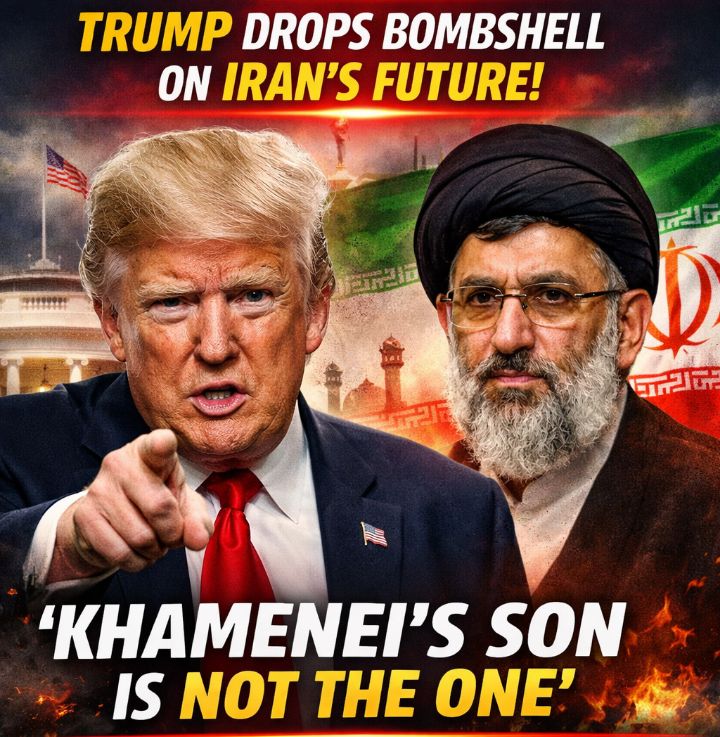
A political storm erupted after Donald Trump made explosive remarks about who should lead Iran following the death of its long-time Supreme Leader Ali Khamenei. In a recent interview, Trump openly rejected the possibility that Khamenei’s son could take power and insisted the United States should have a role in shaping Iran’s next leadership.
Trump specifically targeted Mojtaba Khamenei, who is widely seen by some observers as a possible successor to his father. The U.S. president dismissed him as a “lightweight” and said he would not accept him as Iran’s next leader. According to Trump, allowing someone who continues the same policies could push the region back into conflict within a few years.
During the interview, Trump argued that he must personally be involved in the selection of Iran’s next leader. He said the goal should be to ensure a figure who could bring “harmony and peace” to the country and the wider Middle East. His comments marked one of the most direct statements yet about potential U.S. influence over Iran’s political future.
Trump even compared the situation to events in Venezuela, where he claimed the United States played a role in shaping political outcomes during previous power struggles. According to him, a similar approach might be necessary in Iran to prevent another hardline government from taking control.
The remarks come amid an extremely tense moment in the region. Military strikes, retaliation, and rising casualties have fueled fears that the conflict between Iran, the United States, and its allies could spiral into a broader regional crisis affecting multiple countries.
Inside Iran, no official successor has yet been announced. However, Mojtaba Khamenei remains one of the most talked-about figures within the clerical establishment due to his ties with powerful institutions like the Revolutionary Guards and his influence behind the scenes.
Global Banking & Finance Review
Trump’s comments have already triggered debate across the world. Supporters say the U.S. should help prevent another hostile regime from taking power, while critics argue that foreign leaders should not decide Iran’s leadership. As tensions grow, the question of who will lead Iran next could shape the future of the entire Middle East.

Breaking: Trump May Fire Kristi Noem – Chaos at DHS!

Russia Announces Immediate Deployment of 50 Fighter Jets and 20,000 Troops to Support Iran After U.S.–Israel Strike led by Donald Trump and Benjamin Netanyahu

“Trump Stuns the World: ‘Khamenei’s Son Is Unacceptable’—Says He Must Choose Iran’s Next Leader”

The video posted to the official White House X account opens with footage from the 2023 video game “Call of Duty: Modern Warfare 3” before transitioning into footage of real strikes conducted on Iran since Trump launched his war.

CHAOS in Senate Hearing: A Marine Protests Trump’s Iran War — Seconds Later, What a U.S. Senator Allegedly Did Left the Room in Shock

BREAKING: After the Death of Ali Khamenei, Global Tensions Rise as His Son Mojtaba Khamenei Emerges in Iran Power Struggle

YOU WON’T BELIEVE: U.S.–Israel Special Operations Forces Captured Ayatollah Ali Khamenei Eldest Sons Mojtaba and Mostafa Khamenei in Coordinated Overnight Raid Following Deadly Strike on Iran that Saw the death of the Supreme Leader

Tension Rises in Northern Nigeria as Protesters March on U.S. and Israeli Flags — Strong Warning Sent to Donald Trump (Watch Video)

128 Judges Arrested After Shocking FBI Raids — And It All Started With One Routine Traffic Stop

BREAKING: UK confirms drone that targeted its Cyprus base did NOT come from Iran — so who is trying to drag Britain into the war?

Breaking 🚨 “He Says It’s in America’s Interest” — But Where’s the Proof? Professor Robert Spitzer Speaks Out
