
NEWS
BREAKING 🚨 Iran officially says it ‘will not allow a single drop of oil to leave the region’.

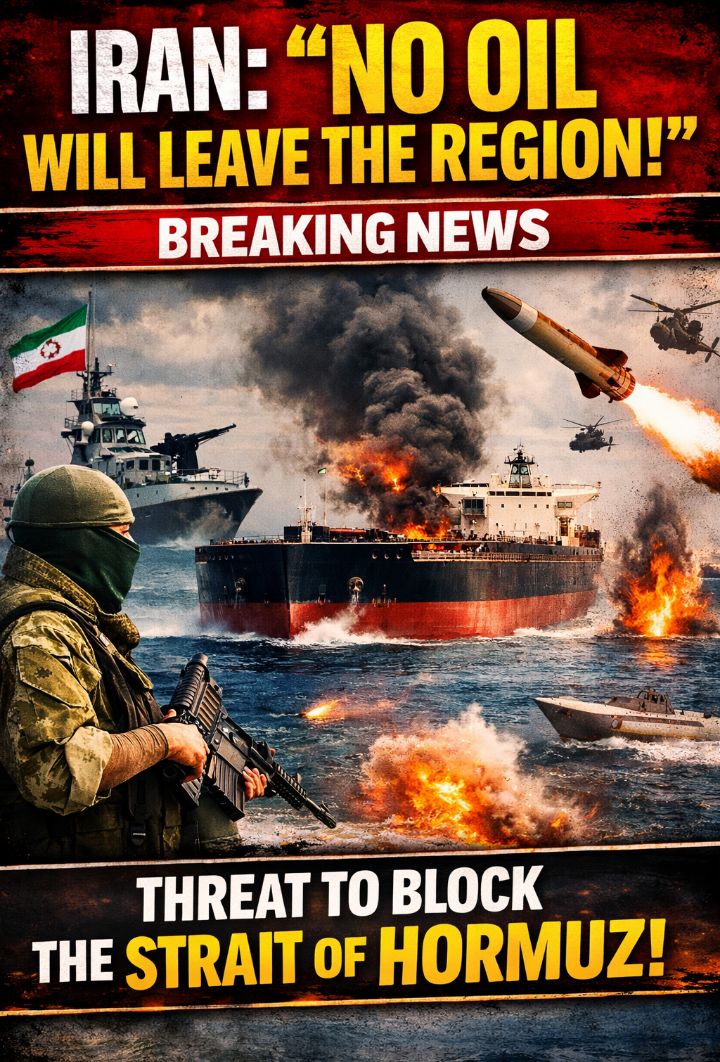
BREAKING — Iran has issued a stark declaration that it will not allow the flow of oil out of the region, effectively threatening to block commercial shipping through the Strait of Hormuz, one of the world’s most vital energy corridors. Iranian Revolutionary Guard forces have reportedly told vessels that no ship is permitted to pass, raising fears of a major disruption to international oil markets.
The Strait of Hormuz, bordered by Iran to the north and Oman and the United Arab Emirates to the south, normally handles about 30% of the world’s seaborne crude oil. Analysts say if the strait remains obstructed or becomes too dangerous for navigation, global oil prices could surge and inflationary pressures may intensify across import-dependent economies.
Iran’s announcement comes amid escalating military conflict in the Middle East, with U.S. and Israeli forces having launched strikes against Iranian targets. The country’s Revolutionary Guard has warned that any vessel attempting to transit the waterway could be attacked, effectively communicating that the strait is unsafe for passage.
Maritime intelligence reports indicate a sharp decline in tanker traffic through the choke point. Fewer major oil tankers have been tracked passing through the strait in recent days, and many shipping companies have paused operations out of concern for safety and insurance complications.
Global leaders are watching closely. Market analysts warn that a prolonged stoppage in oil exports from the Persian Gulf could force major cuts in production if storage limits are reached, potentially leading to further economic strain for producers and consumers alike.
The Economic Times
Despite Iran’s warnings, there has been no formal international recognition of a legal blockade, and officials from other countries have not confirmed an official closure of the Strait of Hormuz. Nonetheless, the risk of disruption has already affected shipping decisions and raised the specter of broader economic turmoil if tensions escalate further.